
best cloud web hosting providers


Cloud web hosting has become an essential part of running a website, especially as businesses and individuals rely on online presence for everything from personal blogs to e-commerce platforms. The right hosting provider can make the difference between a site that loads quickly, stays secure, and handles traffic smoothly—while others may struggle with downtime, slow performance, or hidden costs. Unlike traditional shared hosting, cloud hosting distributes resources across multiple servers, ensuring better scalability, reliability, and flexibility. That flexibility means you can adjust resources up or down based on demand, whether you’re launching a new site or handling sudden spikes in visitors. The downside? Not all providers deliver on their promises, so choosing the right one requires careful consideration of uptime guarantees, performance benchmarks, and support quality.
For businesses and developers, the best cloud hosting isn’t just about raw power—it’s about how well it integrates with your existing tools and meets your long-term needs. Some providers excel in speed and ease of setup, making them ideal for startups or small teams, while others offer enterprise-level features for larger organizations. Security and compliance are also critical, especially if you handle sensitive data or need to meet industry standards. The market is crowded with options, each with its strengths, so picking the right one depends on your specific requirements. Below, I’ve assembled a list below of the best options for cloud web hosting providers.
📋 Table of Contents
1. DigitalOcean

DigitalOcean is a leading cloud hosting provider known for its simplicity and developer-friendly tools. It offers a range of scalable cloud services, including Droplets for virtual servers, Block Storage for persistent data, and Object Storage for large-scale file storage. DigitalOcean’s platform is particularly popular among developers and startups due to its user-friendly interface and affordable pricing. The provider also supports Kubernetes for container orchestration, making it ideal for teams managing complex applications. Its global network of data centers ensures low latency and high reliability, which is crucial for websites and applications that need consistent performance.
- Droplets (Virtual Servers): Pre-configured virtual servers with flexible CPU, RAM, and storage options, perfect for testing and development.
- Kubernetes Integration: Seamless support for Kubernetes clusters, allowing teams to deploy and manage containerized applications efficiently.
- Global Data Centers: 13 data centers across North America, Europe, and Asia, ensuring low latency and high uptime for global users.
- Object Storage: Cost-effective cloud storage solution for large-scale data storage and backups, ideal for media-heavy websites.
- Free Tier: A free tier with limited resources, making it accessible for beginners and small projects to test the platform.
2. AWS (Amazon Web Services)

AWS is the industry standard for cloud hosting, offering an expansive suite of services tailored for businesses of all sizes. From basic web hosting to advanced AI and machine learning tools, AWS provides everything needed to build, deploy, and scale applications. Its flexibility makes it a top choice for enterprises with complex infrastructure needs, while its managed services simplify operations for smaller teams. AWS’s global network of data centers ensures high availability and low latency, critical for mission-critical applications. The platform also integrates with other AWS services like S3, EC2, and Lambda, allowing for seamless workflows.
- Elastic Compute Cloud (EC2): Virtual servers with customizable configurations, supporting everything from lightweight tasks to high-performance workloads.
- Amazon S3: Scalable cloud storage for files, backups, and media, with enterprise-grade security and compliance options.
- Serverless Computing (Lambda): Automatically scales compute resources, reducing operational overhead for event-driven applications.
- Global Reach: Over 300 availability zones across 80+ regions, ensuring low latency and high reliability worldwide.
- Managed Services: Services like RDS for databases and Elastic Beanstalk for application hosting, reducing manual setup and maintenance.
3. Google Cloud Platform (GCP)

Google Cloud Platform (GCP) leverages Google’s infrastructure to deliver powerful cloud hosting solutions. Known for its strong AI and machine learning integrations, GCP is ideal for businesses focused on data analytics, AI-driven applications, and scalable web hosting. Its managed services simplify deployment, while its global network ensures fast performance for users worldwide. GCP also offers cost-effective solutions for startups and small businesses, with flexible pricing models that adapt to growth. The platform’s focus on sustainability and efficiency makes it a compelling choice for environmentally conscious organizations.
- Compute Engine: Virtual machines with customizable resources, supporting everything from lightweight tasks to high-performance workloads.
- Cloud Storage: Scalable, durable storage with enterprise-grade security and compliance options, including AI-powered data management.
- AI/ML Services: Built-in AI tools like Vision AI, Natural Language API, and AutoML for developing machine learning models without deep expertise.
- Global Network: Over 100 data centers across 34 regions, ensuring low latency and high reliability for global applications.
- Free Tier: A generous free tier with 1 f1-micro instance per month, 1GB Cloud Storage, and 2GB SQL database storage.
4. Vercel
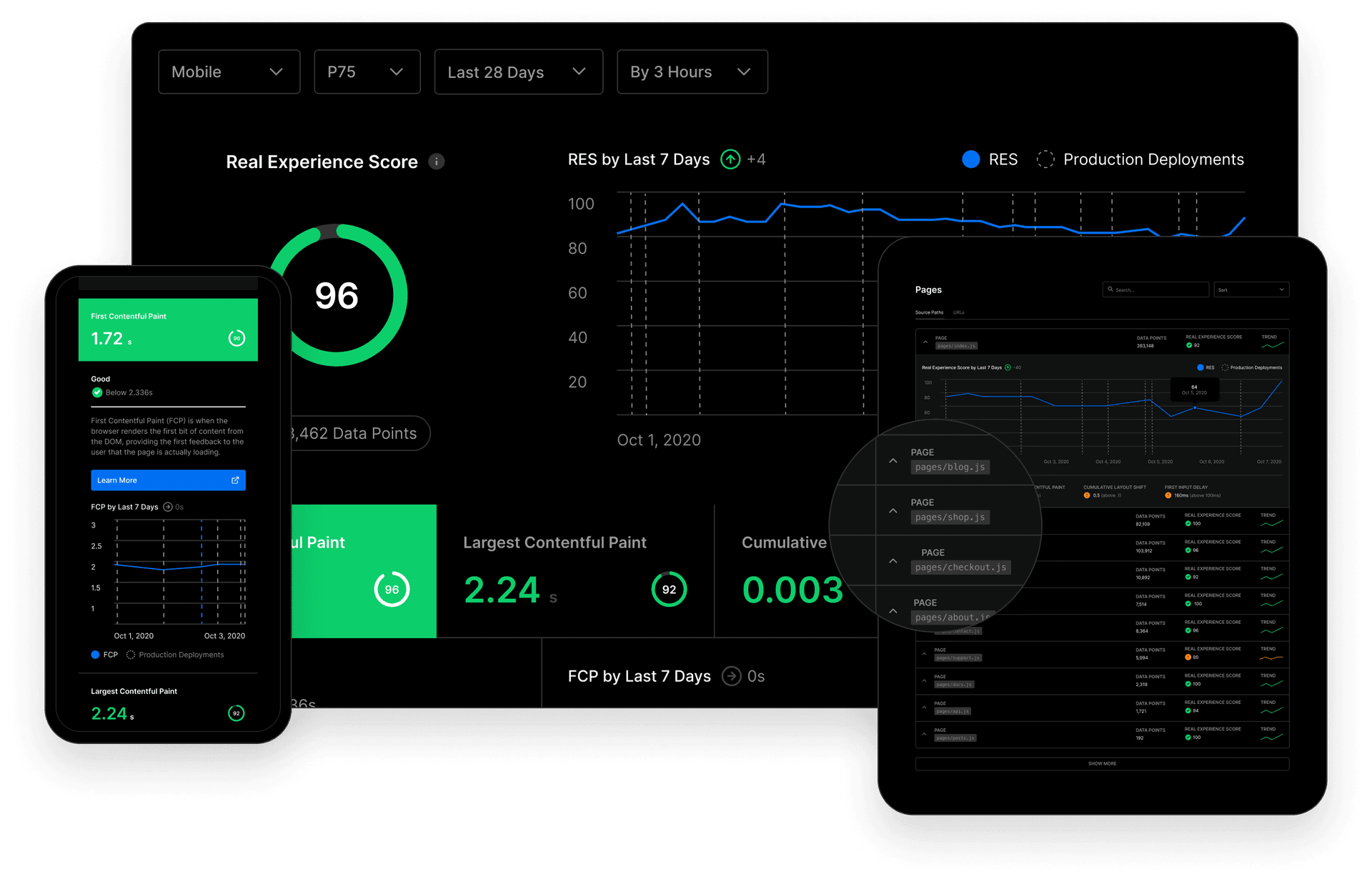
Vercel specializes in modern web hosting, focusing on static sites, serverless functions, and full-stack applications. Built for developers who prioritize speed, performance, and ease of use, Vercel integrates seamlessly with frameworks like Next.js, React, and Vue.js. Its global edge network ensures ultra-low latency, making it ideal for high-traffic websites and applications. Vercel also offers advanced features like automatic deployments and built-in CDN, simplifying the hosting process for developers. The platform is particularly popular among startups and teams looking to deploy applications quickly and efficiently.
- Serverless Functions: Run code without managing servers, scaling automatically with traffic and reducing operational overhead.
- Edge Network: Global edge network that caches content closer to users, improving load times and reducing latency.
- Automatic Deployments: Continuous deployment tools that simplify CI/CD pipelines, allowing developers to focus on coding.
- Built-in CDN: Cloud-based content delivery network that optimizes static and dynamic content delivery globally.
- Free Tier: Free plan with unlimited traffic, 100MB storage, and 50GB bandwidth for small projects.
5. InfinityFree

InfinityFree is a budget-friendly cloud hosting provider designed for beginners and small websites. It offers free hosting with no hidden costs, making it an excellent choice for personal blogs, portfolios, and small business websites. While it lacks some advanced features found in enterprise-grade providers, InfinityFree provides reliable uptime and basic hosting capabilities. Its simplicity and affordability make it a popular option for those new to web hosting or on a tight budget. However, users should be aware of limitations like limited storage and bandwidth, which may not suit high-traffic sites.
- Free Hosting: No monthly fees or hidden costs, making it accessible for beginners and small projects.
- Basic Web Hosting: Supports common web technologies like PHP, MySQL, and WordPress, with easy setup options.
- Shared Hosting: Shared server environment with basic resources, suitable for low-traffic websites.
- Uptime Guarantee: Reliable uptime with minimal downtime, though not as robust as enterprise providers.
- Limited Storage & Bandwidth: Free tier includes 5GB storage and 5TB bandwidth per month, which may be insufficient for growing sites.
6. Hetzner Cloud

Hetzner Cloud is a European cloud hosting provider known for its affordability and reliability. It offers a range of virtual servers, block storage, and network solutions tailored for businesses and developers. Hetzner’s focus on simplicity and cost-effectiveness makes it a great choice for startups and small businesses looking to avoid complex pricing models. Its global network of data centers ensures low latency and high performance, while its managed services simplify infrastructure management. The provider also offers a generous free tier, making it accessible for beginners and small-scale projects.
- Virtual Servers: Customizable virtual servers with flexible CPU, RAM, and storage options, ideal for testing and development.
- Block Storage: Persistent storage solutions for databases and applications, ensuring data integrity and availability.
- Global Network: Data centers in Germany, Sweden, and the Netherlands, providing low-latency access for European users.
- Managed Services: Simplified infrastructure management with support for common tasks like backups and security updates.
- Free Tier: Free 10GB storage and 1TB bandwidth per month, along with a free virtual server for testing.
7. LiquidWeb
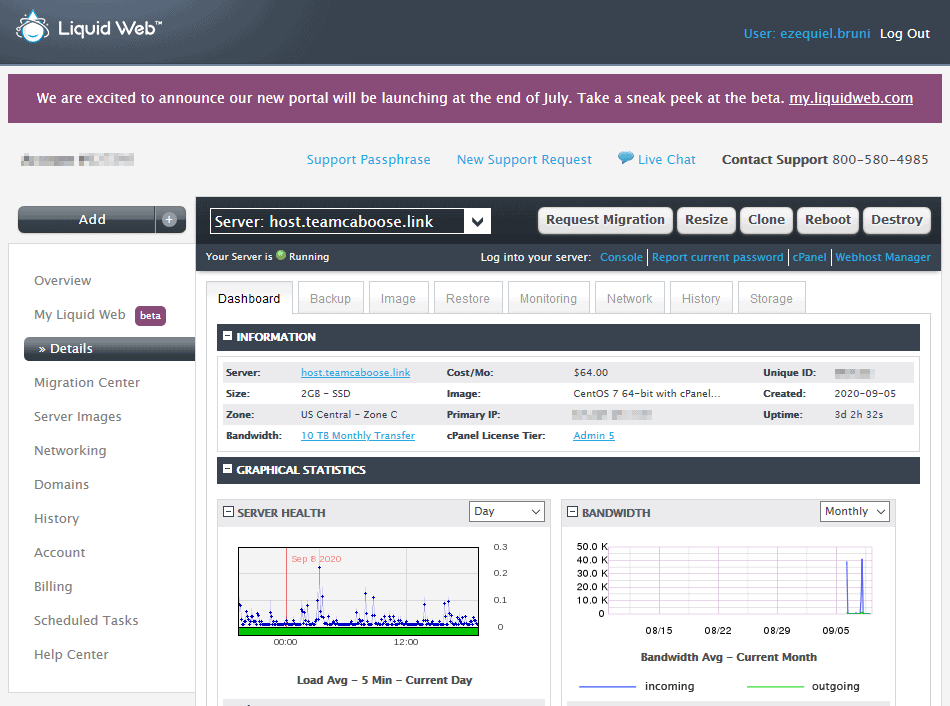
LiquidWeb is a mid-tier cloud hosting provider known for its reliability and performance. It offers a range of hosting solutions, including dedicated servers, managed WordPress hosting, and cloud computing services. LiquidWeb’s focus on enterprise-grade infrastructure makes it a top choice for businesses requiring high availability and scalability. Its managed services simplify maintenance, while its global network ensures fast load times for users worldwide. The provider also offers a generous free trial, allowing users to test its services before committing.
- Dedicated Servers: High-performance dedicated servers with customizable configurations for mission-critical applications.
- Managed WordPress Hosting: Optimized hosting for WordPress sites with automatic updates and security patches.
- Cloud Computing: Scalable cloud solutions with flexible resources, ideal for growing businesses.
- Global Data Centers: Data centers in the U.S., Canada, and Europe, ensuring low latency and high reliability.
- Free Trial: 30-day free trial with no credit card required, allowing users to evaluate the platform.
8. Hostinger
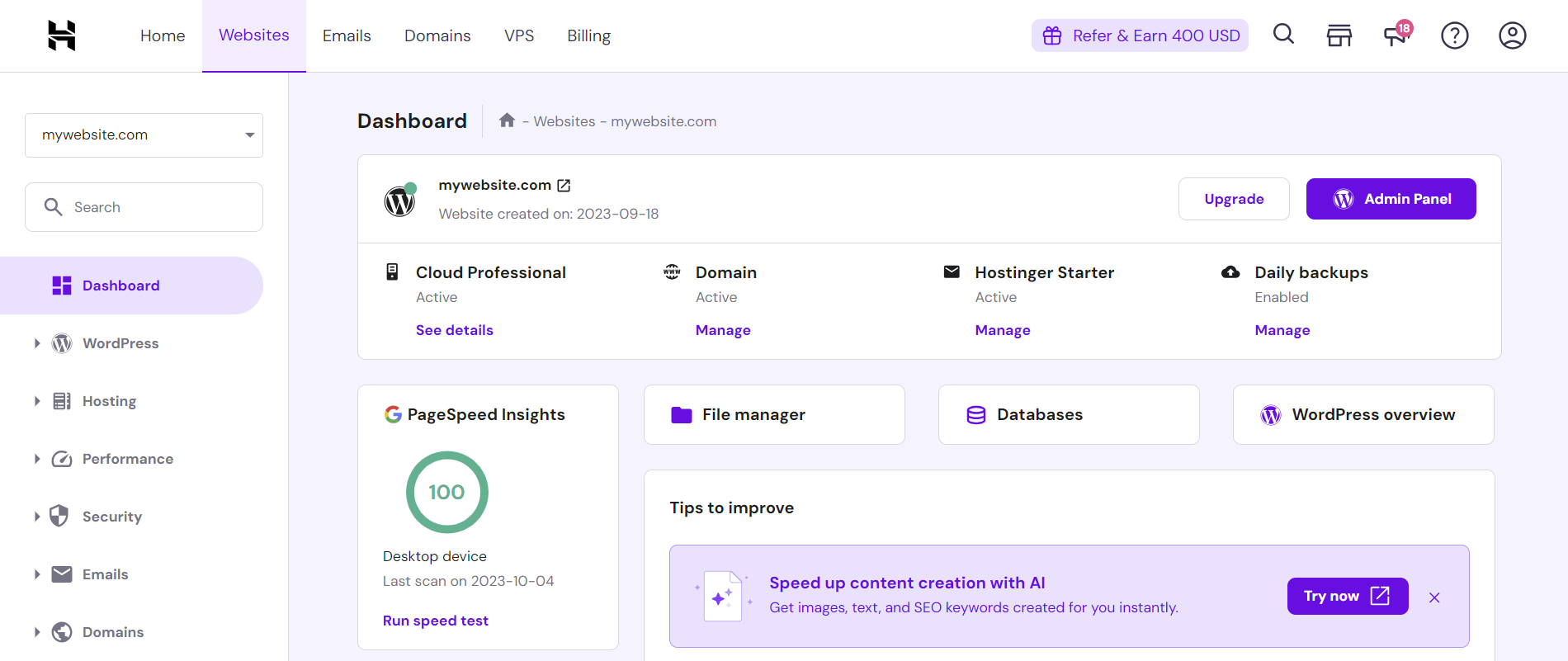
Hostinger is a budget-friendly cloud hosting provider that offers affordable yet reliable cloud solutions. It provides virtual private servers (VPS), managed hosting, and cloud hosting tailored for developers and small businesses. Hostinger’s user-friendly interface and competitive pricing make it a popular choice for those looking to scale their websites without breaking the bank. Its global network of data centers ensures fast performance, while its managed services simplify infrastructure management. The provider also offers a generous free trial, allowing users to test its services before committing.
- Virtual Private Servers (VPS): Customizable VPS options with flexible CPU, RAM, and storage, suitable for developers and growing businesses.
- Managed Hosting: Simplified hosting with automatic updates and security patches, ideal for WordPress and other CMS platforms.
- Cloud Hosting: Scalable cloud solutions with pay-as-you-go pricing, allowing flexibility for changing needs.
- Global Network: Data centers in the U.S., Europe, and Asia, ensuring low latency and high performance worldwide.
- Free Trial: Free 30-day trial with no credit card required, allowing users to test the platform.
9. A2 Hosting

A2 Hosting is a cloud hosting provider known for its speed and reliability. It offers a range of cloud solutions, including managed WordPress hosting, VPS hosting, and dedicated servers. A2 Hosting’s focus on performance ensures fast load times and high uptime, making it ideal for businesses and developers requiring a high-performance hosting environment. Its global network of data centers ensures low latency, while its managed services simplify maintenance. The provider also offers a generous free trial, allowing users to test its services before committing.
- Managed WordPress Hosting: Optimized hosting for WordPress sites with automatic updates and security patches.
- VPS Hosting: Customizable VPS options with flexible resources, ideal for developers and growing businesses.
- Dedicated Servers: High-performance dedicated servers with customizable configurations for mission-critical applications.
- Turbo Server Technology: Advanced caching and optimization tools that significantly improve page load times.
- Free Trial: Free 30-day trial with no credit card required, allowing users to evaluate the platform.
10. Cloudways
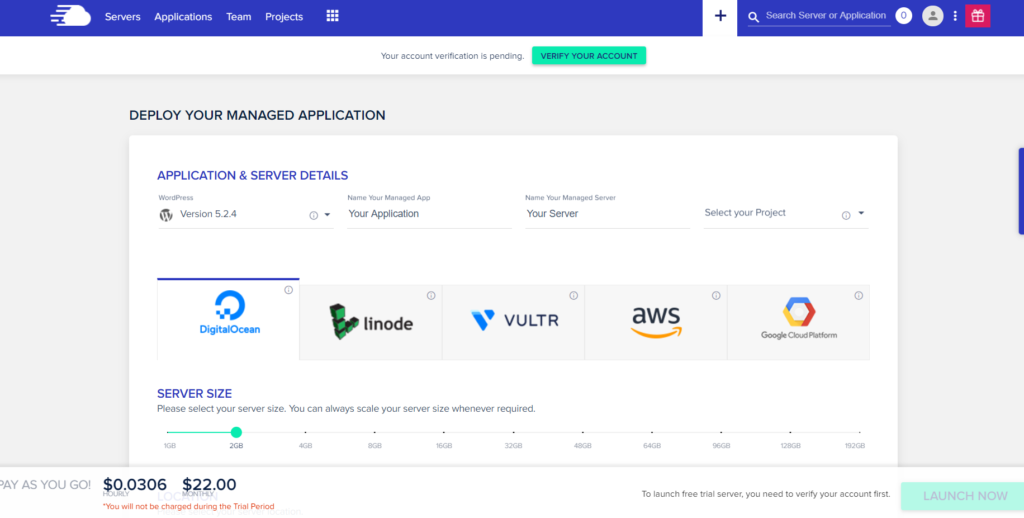
Cloudways is a managed cloud hosting provider that offers a range of cloud solutions, including Docker, Kubernetes, and managed WordPress hosting. It integrates with major cloud providers like AWS, Google Cloud, and DigitalOcean, providing flexibility and scalability. Cloudways focuses on simplicity and performance, making it ideal for developers and businesses looking to leverage cloud infrastructure without complex setup. Its global network ensures low latency, while its managed services simplify maintenance. The provider also offers a generous free trial, allowing users to test its services before committing.
- Multi-Cloud Support: Integrates with AWS, Google Cloud, and DigitalOcean, offering flexibility and scalability.
- Managed Services: Simplified infrastructure management with automatic updates and security patches.
- Docker & Kubernetes Support: Supports containerized applications, making it ideal for modern web development.
- Global Network: Data centers in the U.S., Europe, and Asia, ensuring low latency and high performance worldwide.
- Free Trial: Free 30-day trial with no credit card required, allowing users to evaluate the platform.
Frequently Asked Questions
What factors should I consider when choosing a cloud hosting provider?
When selecting a cloud hosting provider, consider factors like scalability, performance, uptime guarantees, pricing, and the specific needs of your website or application. Ensure the provider offers the features you require, such as managed services, global network coverage, and support for your preferred technologies. Additionally, evaluate the provider’s reputation for reliability and customer support.
Is cloud hosting better than traditional web hosting?
Cloud hosting offers scalability, flexibility, and performance advantages over traditional shared hosting. It allows you to adjust resources based on demand, ensuring your website performs well during traffic spikes. However, traditional hosting may be sufficient for small websites with predictable traffic. Cloud hosting is ideal for growing businesses or applications requiring high availability and performance.
How do I know if my website needs cloud hosting?
If your website experiences slow load times, requires frequent updates, or needs to handle high traffic volumes, cloud hosting may be necessary. Cloud hosting is particularly beneficial for applications with unpredictable traffic patterns, such as e-commerce sites or content-heavy blogs. Start with a free trial or demo to test the provider’s performance before committing.
What is the difference between managed and unmanaged cloud hosting?
Managed cloud hosting includes automatic updates, security patches, and technical support, simplifying your workflow. Unmanaged hosting requires you to handle maintenance, security, and updates yourself. Managed hosting is ideal for beginners or those without technical expertise, while unmanaged hosting offers more control for experienced users.
How much does cloud hosting typically cost?
Cloud hosting costs vary widely depending on the provider, resources, and services included. Free tiers are available for beginners, while premium plans can range from $5 to $100+ per month. Pricing often scales with usage, so pay-as-you-go models are common. Always compare features and pricing to find the best value for your needs.
Can I migrate my existing website to cloud hosting?
Yes, most cloud hosting providers offer migration tools or services to help you transfer your website. Many providers provide step-by-step guides or professional migration assistance. Start with a free trial to test the migration process before committing to a long-term plan.
What should I look for in a cloud hosting provider’s support?
Look for providers with 24/7 customer support, including live chat, email, and phone options. Ensure they offer responsive support and a good reputation for resolving issues quickly. Read reviews and check the provider’s support response times to gauge reliability.