best hosting for developers


Choosing the right hosting for development work isn’t just about uptime or price—it’s about tools, flexibility, and control. Developers need environments that support their workflows without unnecessary friction. That means SSH access, container support, easy scaling, and integrations with version control, CI/CD pipelines, and databases. The best hosts for developers don’t just serve files; they provide the infrastructure to build, test, and deploy efficiently.
Not all hosting is created equal, and what works for a static blog won’t cut it for a complex application. Some platforms specialize in simplicity, while others offer raw power with full root access. The right choice depends on the project—whether it’s a small API, a full-stack app, or a microservices architecture. Performance, reliability, and developer experience should drive the decision, not just the cheapest monthly rate.
Below, I’ve assembled a list of the best hosting options for developers, covering a range of needs from managed services to self-hosted solutions. Each has been evaluated based on real-world usability, not marketing claims.
📋 Table of Contents
1. DigitalOcean
DigitalOcean is a cloud infrastructure provider beloved by developers for its simplicity, affordability, and powerful features. It offers scalable virtual private servers (Droplets), managed databases, Kubernetes clusters, and more, all with a user-friendly interface. DigitalOcean is particularly popular among startups, small to medium-sized businesses, and individual developers who need a reliable and cost-effective hosting solution. Its documentation is extensive, and the community support is robust, making it an excellent choice for both beginners and experienced developers. The platform also provides one-click app installations, which can save time when setting up common development environments like WordPress, Node.js, or Docker. DigitalOcean is known for its transparent pricing and predictable costs, which is a significant advantage for developers working within a budget. The platform also offers a generous free tier for certain services, making it accessible for those just starting out. With data centers worldwide, DigitalOcean ensures low latency and high availability, which is crucial for applications requiring global reach. Additionally, its API and CLI tools allow for seamless automation and integration into existing workflows, making it a favorite for DevOps and CI/CD pipelines.
- Scalable Droplets: Virtual machines (Droplets) that can be easily scaled up or down based on your needs. Choose from various configurations, including standard, CPU-optimized, and memory-optimized options.
- Managed Databases: Fully managed database services for PostgreSQL, MySQL, and Redis, with automated backups, failover, and scaling. This reduces the operational overhead of managing databases manually.
- Kubernetes (DOKS): Managed Kubernetes service that simplifies deploying, managing, and scaling containerized applications. It integrates seamlessly with DigitalOcean’s other services.
- One-Click Apps: Pre-configured applications and development stacks (e.g., WordPress, Docker, Node.js) that can be deployed in seconds, saving time on setup and configuration.
- Global Data Centers: Data centers in multiple regions worldwide, ensuring low latency and high availability for your applications. Choose the location that best suits your user base.
2. AWS (Amazon Web Services)
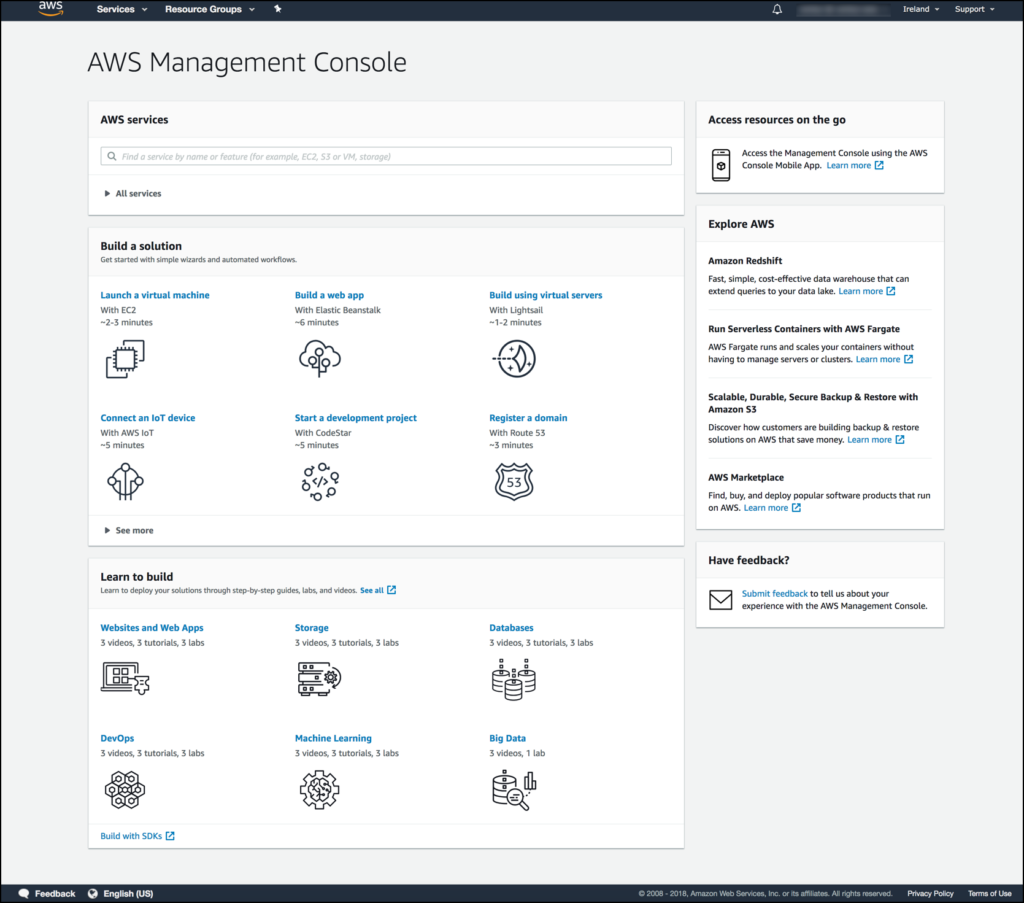
Amazon Web Services (AWS) is the most comprehensive and widely adopted cloud platform, offering over 200 fully featured services from data centers globally. AWS is a top choice for developers who need unparalleled scalability, flexibility, and a vast ecosystem of tools. It’s ideal for large-scale applications, enterprise solutions, and projects requiring advanced services like machine learning, AI, serverless computing, and big data analytics. AWS is also highly customizable, allowing developers to tailor their infrastructure to specific needs, whether it’s for a simple website or a complex, distributed system. While AWS is powerful, it can be overwhelming for beginners due to its complexity and the sheer number of services available. However, its pay-as-you-go pricing model makes it accessible for projects of all sizes, and its free tier is generous for those looking to experiment. AWS also offers extensive documentation, tutorials, and a vibrant community, making it easier to find support when needed. For developers working on cutting-edge projects or those requiring high availability and global reach, AWS is often the go-to solution. Its robust security features and compliance certifications also make it a trusted choice for industries with strict regulatory requirements.
- Elastic Compute Cloud (EC2): Scalable virtual servers that can be customized with different CPU, memory, and storage configurations. Ideal for running applications, hosting websites, or processing data.
- Lambda (Serverless): Serverless computing service that runs code in response to events without requiring server management. Perfect for microservices, APIs, and event-driven applications.
- S3 (Simple Storage Service): Highly scalable object storage for storing and retrieving any amount of data. Commonly used for backups, static website hosting, and media storage.
- RDS (Relational Database Service): Managed database service supporting multiple engines like MySQL, PostgreSQL, and Oracle. Automates tasks like backups, patching, and scaling.
- Global Infrastructure: Data centers in multiple regions and availability zones worldwide, ensuring low latency, high availability, and disaster recovery capabilities.