
best cloud hosting servers


Cloud hosting has become a cornerstone for businesses and individuals needing reliable, scalable, and flexible web infrastructure. Unlike traditional hosting, which locks you into a single provider and limited resources, cloud servers offer dynamic performance by distributing workloads across multiple servers. This setup ensures uptime, security, and the ability to adjust resources based on demand—whether you’re running a small website or a high-traffic application.
For most users, choosing the right cloud hosting server means balancing cost, performance, and ease of use. Some providers excel in speed and advanced features like AI-driven optimization, while others prioritize affordability and simplicity. The best options cater to different needs, from developers testing new projects to e-commerce sites handling thousands of visitors daily. Whether you’re migrating an existing site or building from scratch, the right cloud server can make the difference between smooth operation and costly downtime.
Below, I’ve assembled a list of the best options for cloud hosting servers.
📋 Table of Contents
1. AWS Elastic Compute Cloud (EC2)
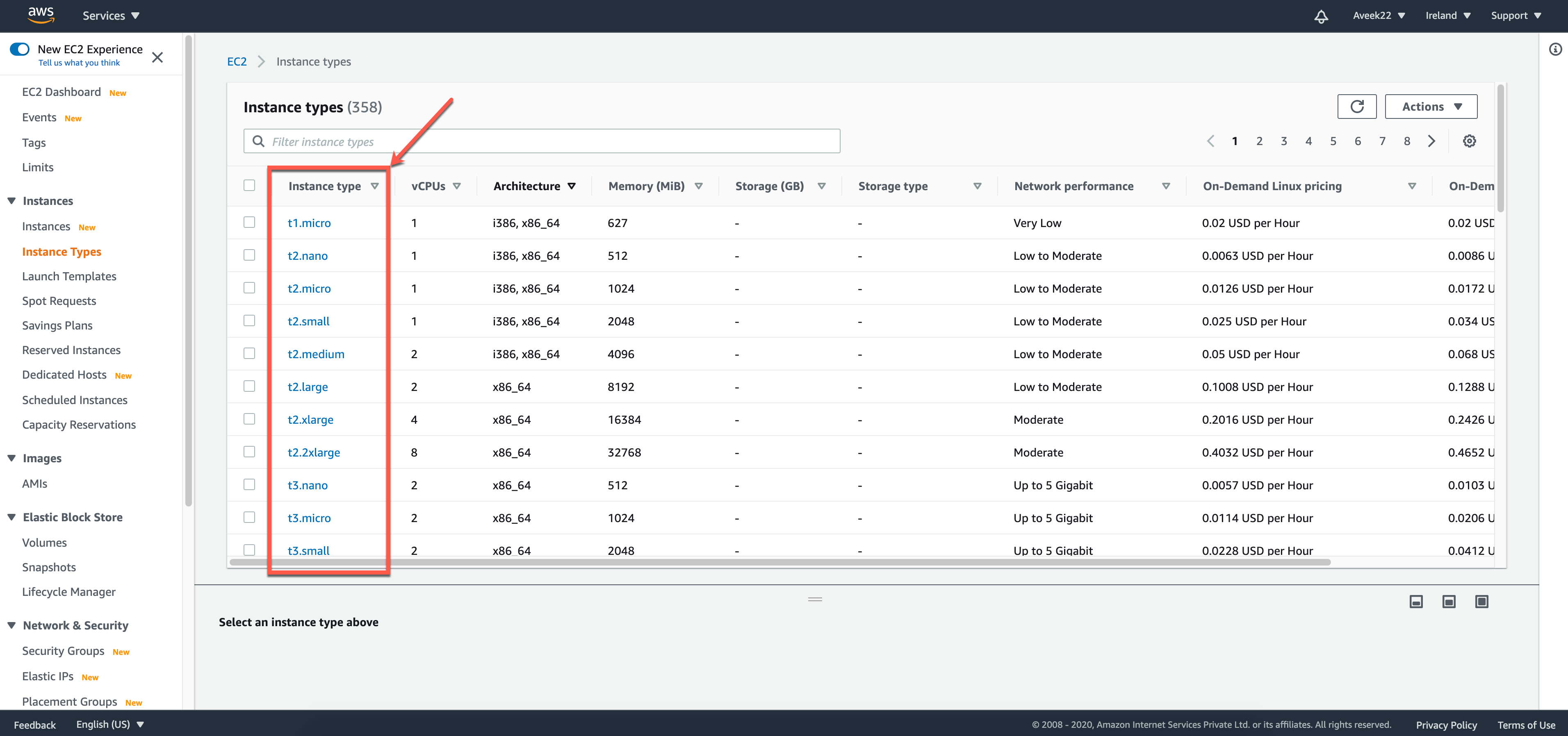
AWS Elastic Compute Cloud (EC2) is the backbone of Amazon Web Services’ cloud infrastructure, offering scalable virtual servers to meet your computing needs. It’s ideal for businesses and developers requiring high availability, flexibility, and performance. EC2 provides a wide range of instance types, from lightweight compute to high-memory workloads, making it suitable for everything from small websites to enterprise applications. Its integration with other AWS services, such as S3 and Lambda, streamlines development and deployment, ensuring seamless scalability and cost efficiency.
- Auto Scaling: Automatically adjusts the number of EC2 instances based on demand, ensuring optimal performance and cost savings.
- High Availability: Supports multi-AZ deployments, distributing workloads across multiple availability zones for fault tolerance.
- Pay-as-you-go Pricing: Charges based on usage, allowing you to pay only for the compute resources you consume.
- Wide Instance Selection: Offers over 600 instance types, including GPU, memory-optimized, and specialized instances for AI, machine learning, and more.
- Seamless AWS Integration: Works natively with other AWS services like S3, RDS, and CloudWatch for unified management.
2. Google Cloud Platform (GCP) Compute Engine
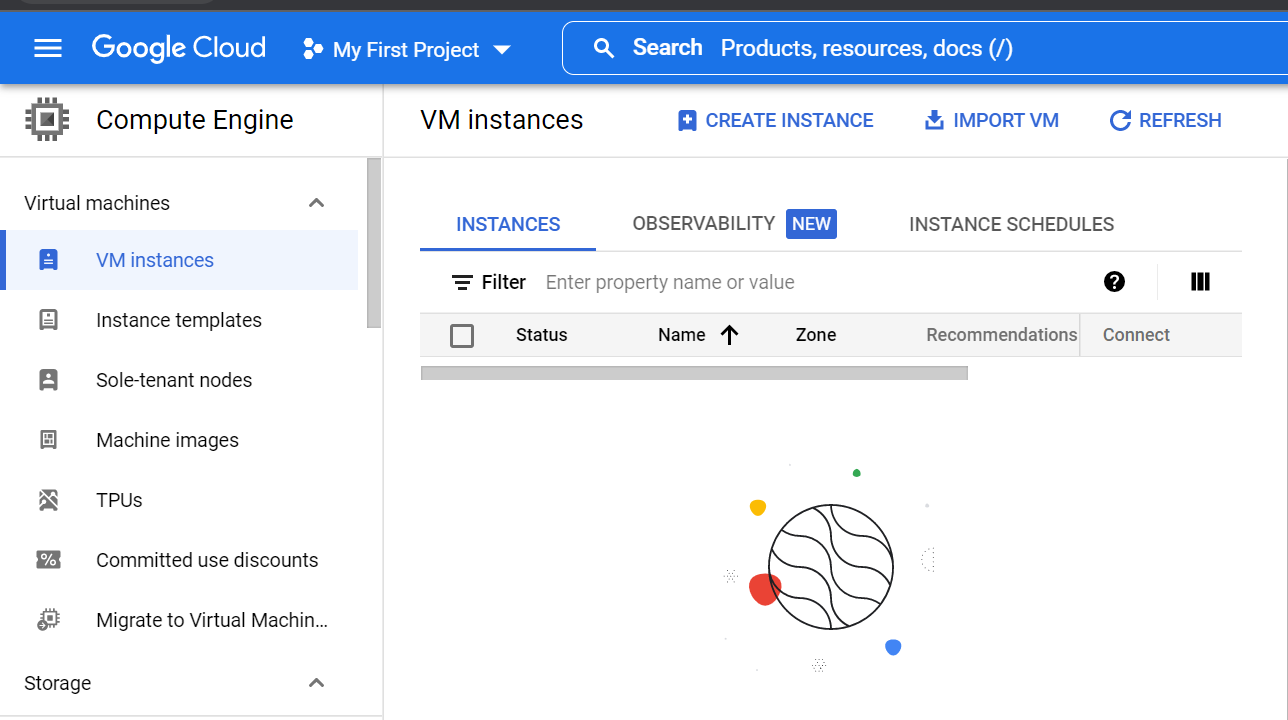
Google Cloud Platform’s Compute Engine is a flexible, scalable virtual machine platform that lets you run applications in the Google cloud. It’s particularly strong for developers and businesses leveraging Google’s global infrastructure, offering low-latency performance and seamless integration with Google’s ecosystem. Compute Engine supports customizable VMs, making it ideal for testing, development, and production workloads. Its focus on cost efficiency and high performance ensures it’s a top choice for those who prioritize reliability and speed.
- Customizable VMs: Allows you to configure CPU, memory, and storage to match your exact needs.
- Global Networking: Benefits from Google’s low-latency global network, ensuring fast data transfer.
- Automatic Machine Types: Predefined machine types simplify setup while offering flexibility for different workloads.
- Spot Instances: Offers cost savings with up to 90% discount on unused capacity.
- High Availability: Supports multi-zone deployments for fault tolerance and uptime.
3. Microsoft Azure Virtual Machines
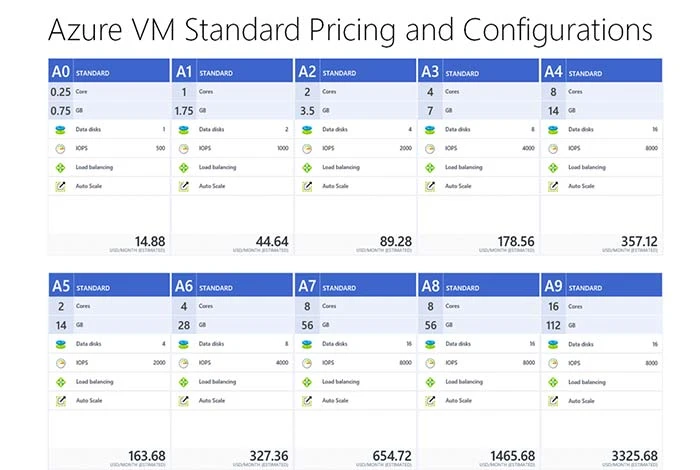
Azure Virtual Machines provide a robust, secure, and scalable way to run applications in the cloud. Ideal for enterprises already using Microsoft tools, Azure VMs offer deep integration with Windows and Linux environments, making them perfect for hybrid cloud setups. They support high-performance computing, AI, and machine learning workloads, along with advanced security features like Azure Security Center. Whether you’re running legacy systems or modern applications, Azure VMs deliver reliability and flexibility.
- Deep Microsoft Integration: Seamless compatibility with Windows Server, SQL Server, and other Microsoft products.
- High Availability & Disaster Recovery: Supports multi-region deployments and automated failover for resilience.
- Customizable Resource Allocation: Allows fine-tuned control over CPU, memory, and storage for optimal performance.
- Security & Compliance: Built-in security features like Azure Firewall and DDoS protection ensure data protection.
- Spot VMs for Cost Savings: Offers up to 90% discount on unused capacity for cost-effective workloads.
4. DigitalOcean Droplets
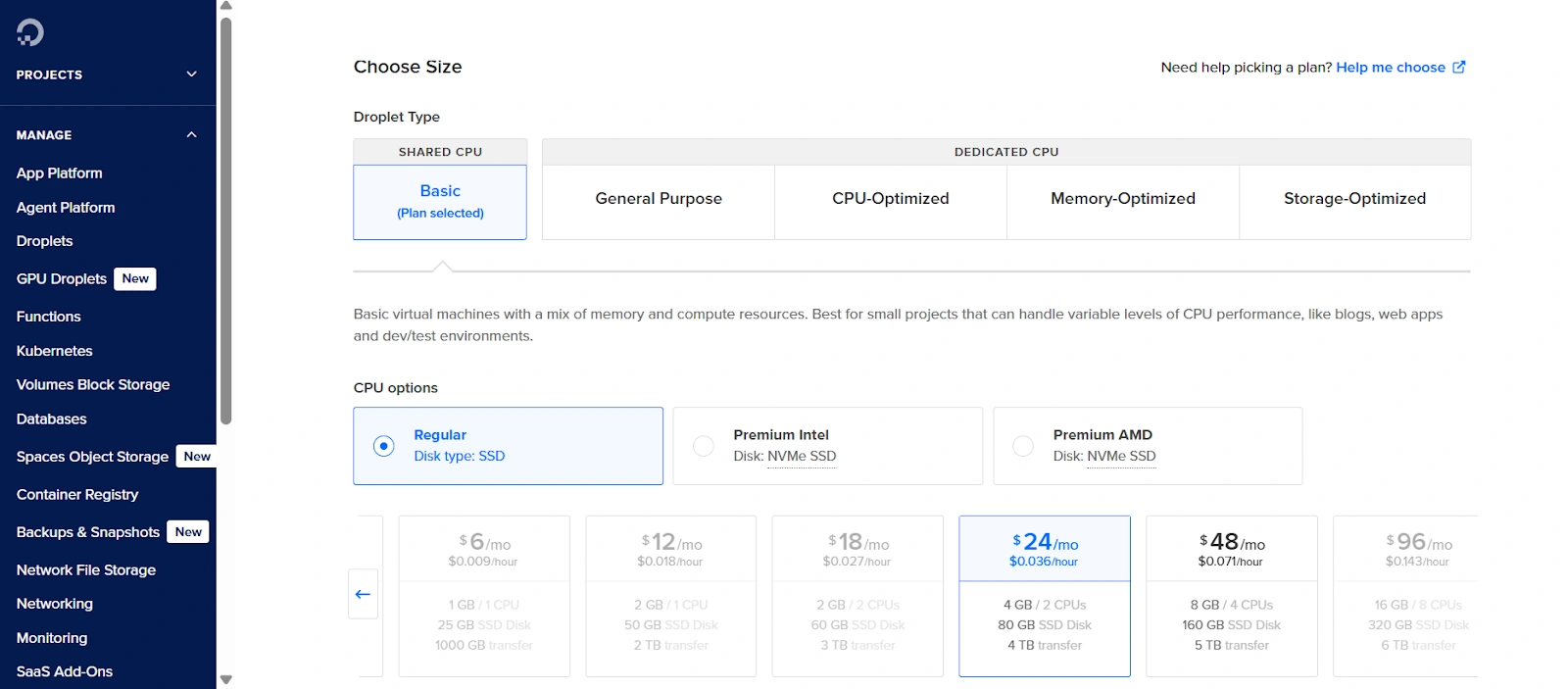
DigitalOcean Droplets are simple, affordable cloud servers designed for developers and small businesses. They offer a straightforward pricing model with no hidden fees, making them a favorite for startups and those new to cloud hosting. Droplets provide easy management through a user-friendly dashboard and support for Linux and Windows. Their focus on simplicity and reliability ensures fast performance and minimal downtime, ideal for hosting websites, APIs, and lightweight applications.
- Simple & Affordable: Fixed pricing with no surprises, starting at just $4 per month for basic configurations.
- Easy Management: User-friendly dashboard for creating, managing, and scaling Droplets with minimal complexity.
- Global Network: Strategically located data centers in multiple regions for low-latency access.
- Automatic Backups: Daily automated backups with easy restore options for peace of mind.
- Lightweight & Fast: Optimized for speed, making them ideal for small to medium workloads.
5. Vultr Cloud Servers
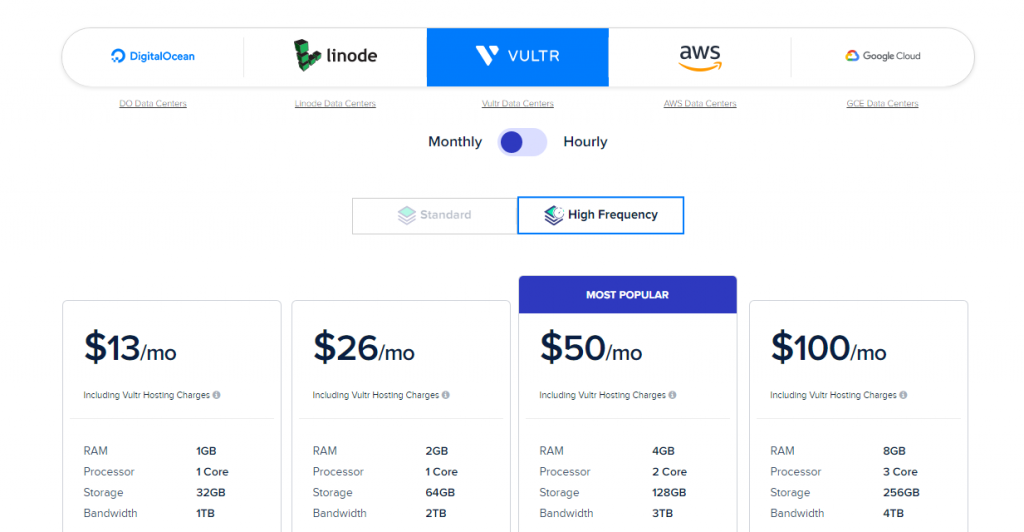
Vultr is known for its speed, simplicity, and global reach, making it a top choice for developers and businesses needing fast, reliable cloud hosting. Their cloud servers offer low-latency performance with data centers in 33 regions, ensuring fast access for users worldwide. Vultr’s pricing is transparent, with no hidden fees, and their user-friendly interface simplifies server management. Whether you’re running a blog, e-commerce site, or a high-traffic application, Vultr delivers performance and ease of use.
- Global Data Centers: 33+ data centers across 29 regions, reducing latency for international users.
- High Performance: Optimized hardware and SSD storage for fast load times and responsiveness.
- Simple & Affordable: Fixed pricing with no surprises, starting at $2.50 per month for basic configurations.
- Automatic Backups: Daily automated backups with easy restore options included.
- 24/7 Support: Round-the-clock customer support for troubleshooting and assistance.
6. Hetzner Cloud

Hetzner Cloud is a budget-friendly cloud hosting solution popular in Europe and among developers globally. Known for its reliability and low costs, Hetzner offers a wide range of server configurations, from basic VPS options to high-performance instances. Their focus on simplicity and affordability makes it a great choice for small businesses, startups, and individuals looking for a cost-effective cloud solution. With a strong emphasis on security and performance, Hetzner Cloud ensures a smooth hosting experience.
- Low-Cost Pricing: Affordable starting prices, with no hidden fees or long-term contracts.
- High Performance: SSD storage and optimized hardware for fast load times and responsiveness.
- Global Reach: Data centers in multiple European locations for low-latency access.
- Easy Management: User-friendly dashboard for creating, managing, and scaling servers.
- Automatic Backups: Daily automated backups with easy restore options included.
7. Linode Cloud Servers

Linode is a trusted cloud hosting provider known for its reliability, performance, and developer-friendly tools. Their cloud servers offer a range of configurations, from basic VPS options to high-performance instances, making them suitable for a variety of workloads. Linode’s focus on simplicity and transparency ensures a smooth experience, whether you’re running a website, application, or database. Their global network and strong customer support make them a top choice for businesses and developers alike.
- Global Network: Data centers in multiple regions for low-latency access and global reach.
- High Performance: Optimized hardware and SSD storage for fast load times and responsiveness.
- Simple & Transparent Pricing: Fixed pricing with no hidden fees or surprises.
- Automatic Backups & Snapshots: Daily automated backups and snapshot options for data protection.
- Developer-Friendly Tools: Easy-to-use tools for managing servers, including SSH access and CLI.
8. Oracle Cloud Infrastructure (OCI)
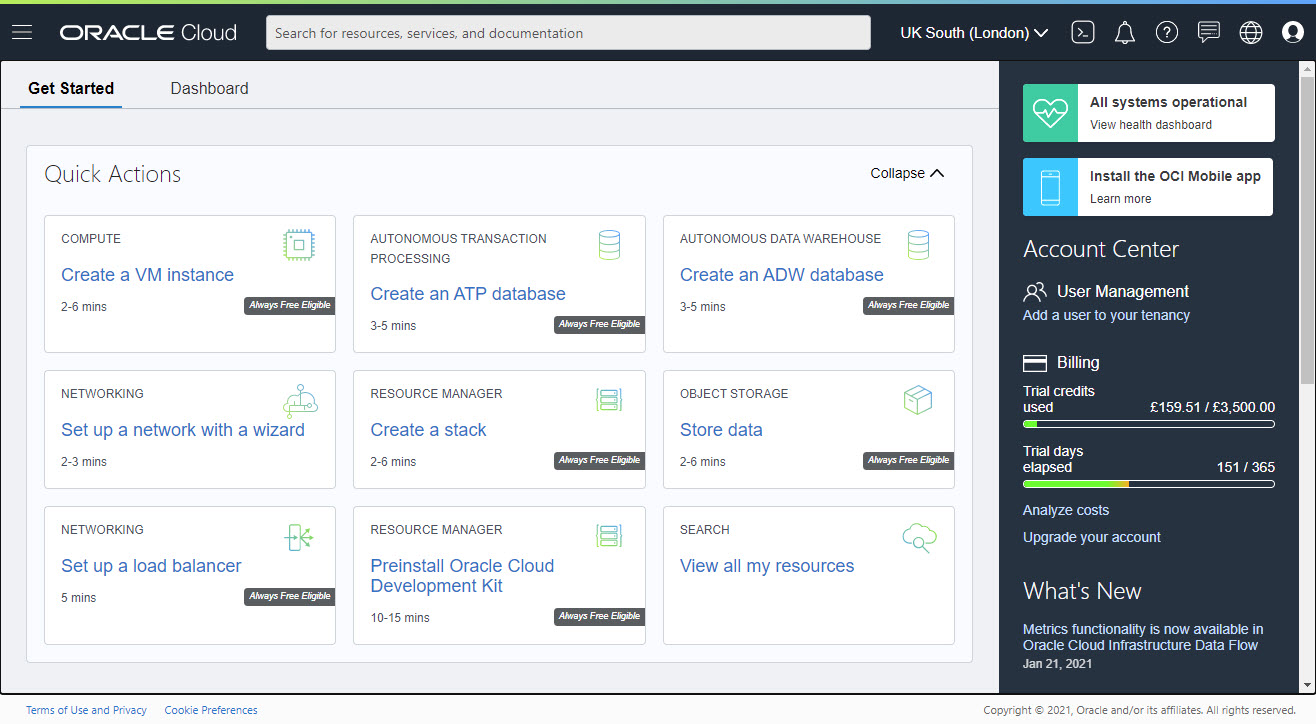
Oracle Cloud Infrastructure is a powerful cloud platform designed for enterprises needing scalability, security, and advanced computing capabilities. It integrates seamlessly with Oracle’s database and enterprise software, making it ideal for businesses already using Oracle products. OCI offers a wide range of services, including compute, storage, networking, and AI/ML, ensuring flexibility and performance for complex workloads. Its focus on security and compliance makes it a strong choice for large organizations.
- Enterprise-Grade Security: Advanced security features, including encryption and compliance certifications.
- Scalable Compute Options: Supports customizable VMs and high-performance computing for complex workloads.
- Global Reach: Data centers in multiple regions for low-latency access and global scalability.
- AI & Machine Learning Integration: Built-in support for AI/ML services and tools for data-driven applications.
- Cost Efficiency: Pay-as-you-go pricing with options for reserved instances and discounts.
9. Alibaba Cloud Elastic Compute Service (ECS)
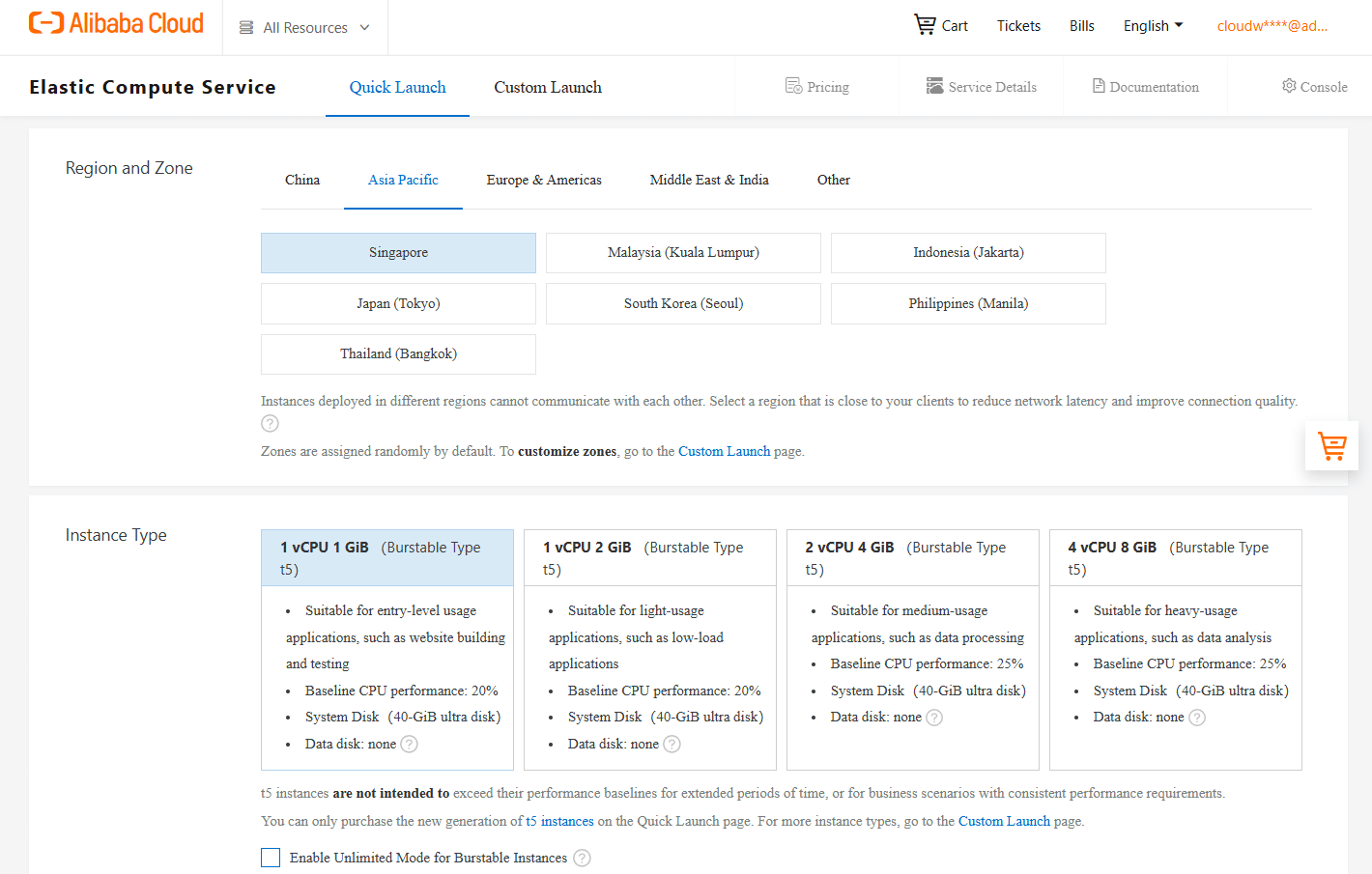
Alibaba Cloud ECS is a scalable and cost-effective cloud computing service, widely used by businesses and developers in Asia and globally. It offers a wide range of instance types, from lightweight to high-performance, making it suitable for everything from small websites to large-scale applications. ECS integrates seamlessly with Alibaba Cloud’s other services, providing a unified platform for management and deployment. Its focus on affordability and reliability ensures a strong hosting experience for enterprises and startups alike.
- Global Data Centers: Data centers in multiple regions, including China, Europe, and the Americas, for low-latency access.
- High Performance & Scalability: Supports customizable VMs and high-performance computing for complex workloads.
- Cost-Effective Pricing: Affordable starting prices with options for reserved instances and discounts.
- Seamless Integration: Works well with other Alibaba Cloud services for unified management.
- Advanced Security Features: Includes encryption, DDoS protection, and compliance certifications.
Frequently Asked Questions
What factors should I consider when choosing a cloud hosting provider?
When selecting a cloud hosting provider, consider factors like pricing, performance, scalability, security, and global reach. Look for a provider that offers flexible instance types, easy management tools, and strong customer support. Additionally, ensure the provider aligns with your specific needs, whether it’s for small websites, high-traffic applications, or enterprise-level workloads.
How do I ensure my cloud server is secure?
To ensure your cloud server is secure, enable encryption for data at rest and in transit, use strong firewall settings, keep software updated, and regularly back up your data. Many cloud providers offer built-in security features like DDoS protection and intrusion detection, which you should leverage.
Can I scale my cloud server up or down as needed?
Yes, most cloud hosting providers offer auto-scaling features that allow you to adjust the number of instances based on demand. This ensures your server performs optimally without manual intervention, saving you time and resources.
What is the difference between shared and dedicated cloud hosting?
Shared hosting means your server shares resources with other users, which can lead to performance variability. Dedicated cloud hosting, on the other hand, provides a dedicated server for your use, offering full control, better performance, and enhanced security. Choose based on your budget and specific needs.
How do I choose the right instance type for my workload?
Select an instance type based on your workload’s requirements. For example, CPU-intensive tasks like video rendering benefit from high-performance instances, while memory-heavy applications like databases may need memory-optimized instances. Always review the provider’s instance specifications to match your needs.
Is there a free trial available for cloud hosting services?
Many cloud hosting providers offer free trials or credits to help you test their services before committing. For example, AWS, Google Cloud, and Microsoft Azure provide free tiers with limited resources. Always check the provider’s website for current trial details.
How do I monitor the performance of my cloud server?
Most cloud providers offer built-in monitoring tools to track server performance, CPU usage, memory, and disk space. Use these tools to proactively manage your server and address issues before they impact your users.