
best cloud web hosting


Choosing the right cloud web hosting is essential for keeping your website running smoothly, especially as traffic grows or your site becomes more complex. Unlike traditional shared hosting, cloud hosting spreads resources across multiple servers, so you don’t rely on a single point of failure. This setup ensures better performance, scalability, and reliability—critical factors if you’re hosting anything from a simple blog to a high-traffic e-commerce platform.
The best cloud hosting also offers flexibility in terms of pricing and resource allocation. You can scale up or down based on demand without overpaying for unused capacity. Security is another key benefit, as cloud providers typically include advanced protections like DDoS filtering, regular backups, and compliance certifications. For businesses or developers who need to manage multiple sites or handle unpredictable traffic spikes, cloud hosting is often the most practical choice. It’s also ideal if you’re looking to future-proof your online presence without major upgrades.
Below is a list of the best options for cloud web hosting.
📋 Table of Contents
1. DigitalOcean

DigitalOcean is a leading cloud hosting provider known for its simplicity and affordability, making it ideal for developers and small businesses. The platform offers a user-friendly interface that simplifies cloud management, allowing you to launch and scale web applications quickly. Its Droplets (virtual private servers) provide flexible resources, while its Object Storage service is perfect for static content. DigitalOcean’s pricing is transparent and competitive, with plans starting as low as $4 per month for basic Droplets. The platform also supports Kubernetes for container orchestration, making it a strong choice for developers who need advanced scalability.
- Droplets (VPS): Customizable virtual private servers with flexible CPU, RAM, and storage options.
- Object Storage: Cost-effective, scalable storage for static files like images, videos, and backups.
- Kubernetes Support: Built-in Kubernetes clusters for managing containerized applications at scale.
- Free Tier: A free $50 credit for new users to test services like Droplets and Block Storage.
- Global Network: Data centers in multiple regions for low-latency global hosting.
2. AWS (Amazon Web Services)
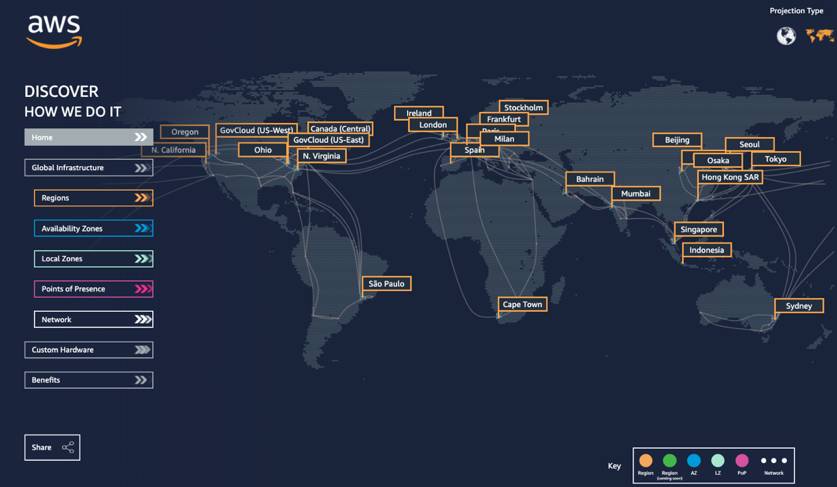
AWS is the industry standard for cloud hosting, offering unmatched scalability, security, and reliability. It’s best suited for enterprises and developers who need enterprise-grade infrastructure, AI/ML tools, and global reach. AWS provides a vast array of services, from compute and storage to databases and networking, all managed through a robust control panel. While it can be complex for beginners, its pay-as-you-go model makes it cost-effective for large-scale applications. AWS’s reputation for reliability and security makes it a top choice for mission-critical websites and applications.
- Elastic Compute Cloud (EC2): Virtual servers with customizable resources for compute-heavy workloads.
- Amazon S3 & EBS: Scalable object and block storage solutions for data storage and backups.
- Global Infrastructure: Data centers in 100+ regions with low-latency networking.
- Managed Services: Automated backups, security patches, and AI-driven analytics.
- Free Tier: 12 months of free services, including 750 hours of EC2 per month.
3. Google Cloud Platform (GCP)
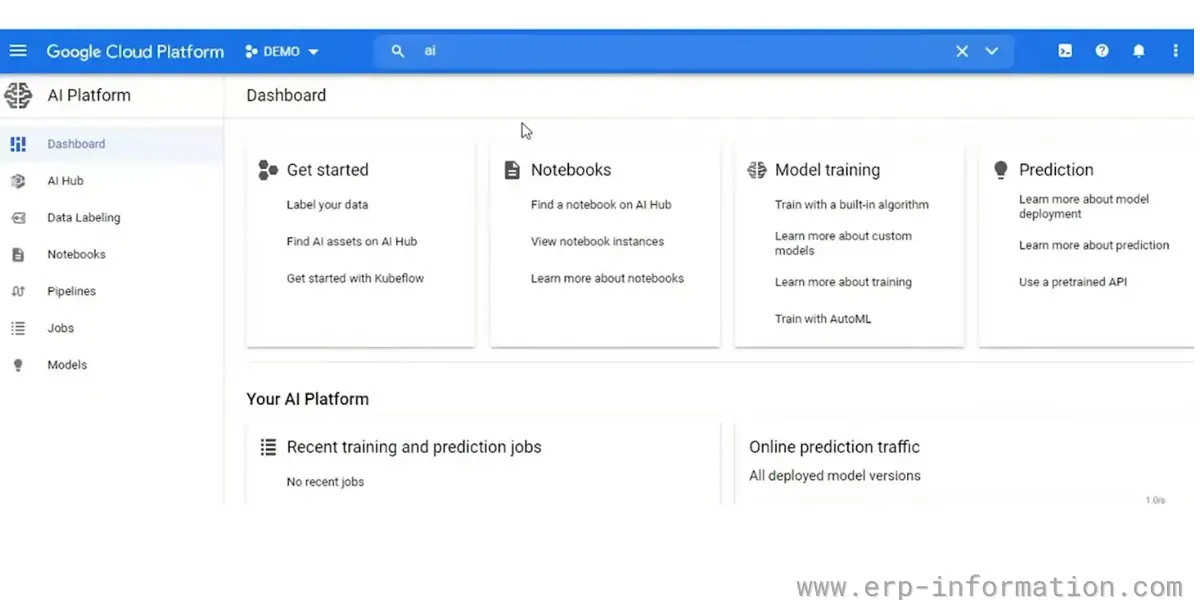
Google Cloud Platform (GCP) is a powerful cloud hosting solution backed by Google’s infrastructure, making it ideal for developers and businesses leveraging Google’s ecosystem. GCP excels in AI/ML, big data, and hybrid cloud setups, with services like Google Kubernetes Engine (GKE) and BigQuery. Its focus on sustainability and cost efficiency—such as committed use discounts—sets it apart. GCP also integrates seamlessly with Google Workspace and other Google services, reducing complexity for users already in the Google ecosystem.
- Compute Engine: Virtual machines with flexible CPU, RAM, and GPU options.
- Kubernetes Engine (GKE): Managed Kubernetes clusters for container orchestration.
- BigQuery & Dataflow: Serverless data analytics and streaming processing.
- AI/ML Tools: Pre-trained AI models for natural language, vision, and recommendation systems.
- Sustainability Focus: Committed use discounts and carbon-neutral commitments.
4. Azure Cloud
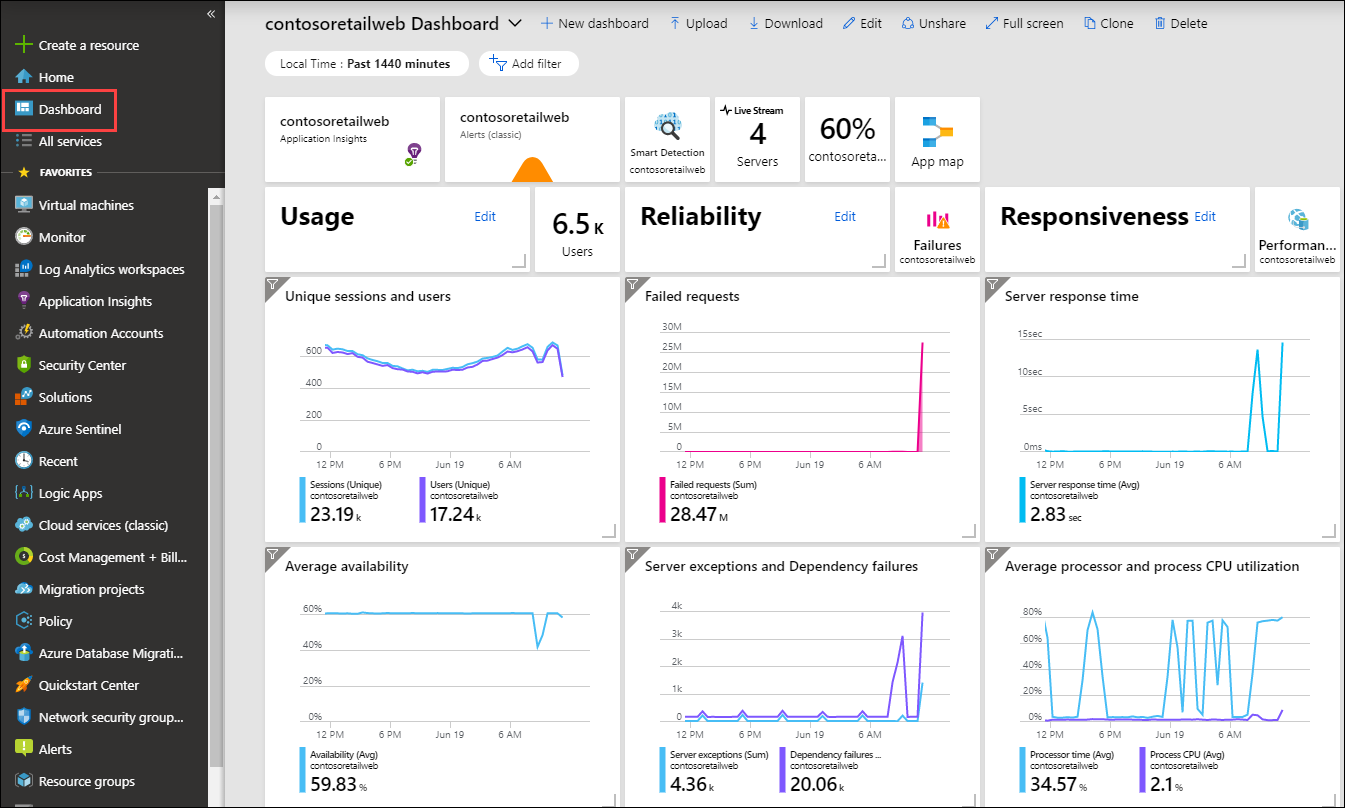
Microsoft Azure is a comprehensive cloud platform designed for businesses using Microsoft software and services. It integrates deeply with Windows, .NET, and Microsoft 365, making it a natural fit for enterprises already in the Microsoft ecosystem. Azure offers advanced security, hybrid cloud capabilities, and AI/ML tools like Azure Cognitive Services. Its global network ensures low-latency performance, and its hybrid solutions allow seamless integration between on-premises and cloud environments. Azure’s pricing is flexible, with options for committed use discounts and pay-as-you-go models.
- Virtual Machines: Customizable VMs with Windows and Linux options.
- Azure Kubernetes Service (AKS): Managed Kubernetes for containerized apps.
- Hybrid Cloud Solutions: Connect on-premises infrastructure to Azure seamlessly.
- AI/ML Services: Cognitive Services for natural language, computer vision, and chatbots.
- Global Reach: Data centers in 60+ regions with Azure Global Reach.
5. Hetzner Cloud

Hetzner Cloud is a budget-friendly cloud hosting provider popular in Europe, offering reliable and affordable solutions for small businesses and developers. Known for its simplicity and transparency, Hetzner provides virtual private servers (VPS) with generous resources at low prices. Its focus on reliability and performance makes it a standout choice for cost-conscious users who prioritize uptime. Hetzner also offers managed services like databases and backups, reducing the need for manual management. While its global reach is limited compared to AWS or GCP, its European data centers are ideal for users in the region.
- Virtual Private Servers (VPS): Affordable, customizable VPS with generous resources.
- Managed Databases: Easy-to-use managed MySQL and PostgreSQL databases.
- Backups & Snapshots: Automated backups and snapshots for data protection.
- Free Tier: Free 10GB storage and 100GB bandwidth for new users.
- European Data Centers: Low-latency hosting in Germany and other European locations.
6. Vultr

Vultr is a modern cloud hosting provider known for its speed, simplicity, and global reach. It offers a user-friendly interface with a focus on performance, making it ideal for developers and small businesses. Vultr’s infrastructure is powered by NVIDIA GPUs, making it a top choice for AI, machine learning, and high-performance computing. Its pricing is transparent, with plans starting as low as $2.50 per month. Vultr also provides a free tier for new users, along with 24/7 customer support, ensuring a seamless experience.
- Global Data Centers: Low-latency hosting in 100+ locations worldwide.
- NVIDIA GPU Instances: High-performance instances for AI, ML, and rendering.
- Simplified Management: Easy-to-use dashboard with one-click scaling.
- Free Tier: Free 10GB storage and 100GB bandwidth for new users.
- 24/7 Support: Reliable customer support for quick issue resolution.
7. InfinityFree

InfinityFree is a free cloud hosting provider designed for beginners and small projects. It offers free virtual private servers (VPS), domain hosting, and email services, making it an excellent option for students, hobbyists, and low-budget developers. While it has limitations—such as limited resources and no dedicated support—it’s a great way to learn cloud hosting without upfront costs. InfinityFree also provides a free SSL certificate and basic security features, ensuring a secure foundation for small websites. However, users should expect slower performance compared to paid providers.
- Free VPS Hosting: Unlimited bandwidth and free domain registration.
- Email Hosting: Free email accounts with custom domains.
- Free SSL Certificates: Automatic HTTPS encryption for security.
- Basic Security: Firewall and malware scanning tools.
- Limited Resources: Free tier includes 512MB RAM and 25GB storage.
8. LiquidWeb
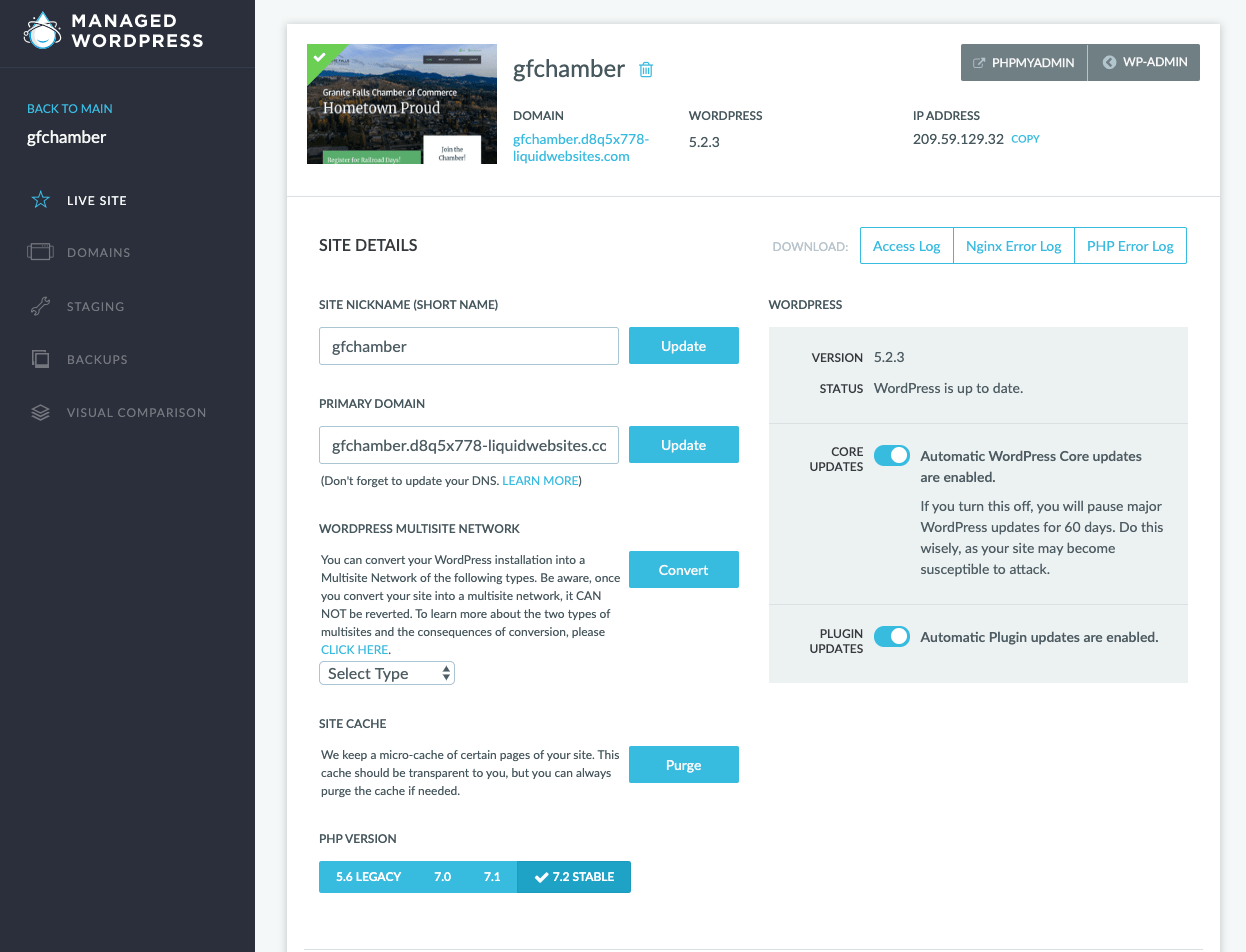
LiquidWeb is a premium cloud hosting provider known for its reliability, performance, and enterprise-grade support. It offers a range of solutions, from shared hosting to dedicated servers and managed WordPress hosting. LiquidWeb’s infrastructure is optimized for speed, with SSD storage and global data centers. Its managed services include automatic backups, security patches, and DDoS protection, making it ideal for businesses that prioritize uptime and security. LiquidWeb’s pricing is competitive for its quality, with plans starting at $10 per month.
- Managed WordPress Hosting: Optimized hosting for WordPress sites with automatic updates.
- Dedicated Servers: High-performance dedicated servers with customizable resources.
- Global Data Centers: Low-latency hosting in multiple regions.
- Automated Backups: Regular backups and disaster recovery solutions.
- 24/7 Support: Dedicated support team for quick issue resolution.
9. Hostinger Cloud

Hostinger Cloud is a budget-friendly cloud hosting solution designed for small businesses and developers. It offers virtual private servers (VPS) with affordable pricing, making it a great alternative to more expensive cloud providers. Hostinger’s cloud hosting includes features like automatic backups, security patches, and a user-friendly control panel. Its global network ensures fast loading times, and its managed services reduce the need for manual management. Hostinger’s pricing is transparent, with plans starting at $4.99 per month, making it accessible for cost-conscious users.
- Virtual Private Servers (VPS): Affordable VPS with customizable resources.
- Automatic Backups: Regular backups to prevent data loss.
- Security Features: DDoS protection and malware scanning.
- Global Network: Low-latency hosting in multiple regions.
- User-Friendly Dashboard: Intuitive control panel for easy management.
10. Oracle Cloud

Oracle Cloud is a high-performance cloud platform designed for enterprises and large-scale applications. It integrates with Oracle’s database and software ecosystem, making it ideal for businesses using Oracle products like Oracle Database and Autonomous Database. Oracle Cloud offers advanced features like AI/ML tools, big data analytics, and hybrid cloud solutions. Its pricing is competitive for large-scale deployments, with options for committed use discounts. Oracle Cloud is known for its reliability, security, and scalability, making it a top choice for mission-critical applications.
- Oracle Database Services: Managed Oracle Database solutions for enterprise workloads.
- AI/ML Tools: Pre-trained AI models for analytics and automation.
- Hybrid Cloud Solutions: Seamless integration between on-premises and cloud environments.
- Global Infrastructure: Data centers in multiple regions for low-latency performance.
- Security & Compliance: Advanced security measures and compliance certifications.
Frequently Asked Questions
What is the best cloud hosting provider for beginners?
For beginners, InfinityFree or Hostinger Cloud are excellent choices due to their free or low-cost pricing, user-friendly interfaces, and limited but manageable resources. These providers offer easy setup and basic features, making them ideal for learning cloud hosting without a steep learning curve.
How do I choose the right cloud hosting provider for my business?
To choose the right cloud hosting provider, consider your business needs: scalability, budget, global reach, and specific features like AI/ML tools or managed databases. If you’re a small business, a provider like Hetzner Cloud or Vultr offers a balance of affordability and performance. For enterprises, AWS or Azure provide enterprise-grade solutions with advanced security and scalability.
Is cloud hosting more expensive than traditional hosting?
Cloud hosting can be more cost-effective than traditional hosting for businesses with variable traffic or scalability needs. Traditional hosting often requires upgrading plans manually, while cloud hosting offers flexible, pay-as-you-go pricing. However, for small businesses with predictable traffic, traditional hosting may still be a cost-effective option.
What factors should I consider when selecting a cloud hosting provider?
Key factors include uptime guarantees, global data center locations, scalability options, security features, and customer support. Ensure the provider offers the resources and services you need, such as managed databases, AI/ML tools, or dedicated IP addresses. Pricing transparency and free trials or money-back guarantees can also help you make an informed decision.
Can I migrate my website from traditional hosting to cloud hosting?
Yes, you can migrate your website to cloud hosting using tools like AWS Migration Hub, Azure Migrate, or third-party migration services. The process typically involves backing up your data, configuring your new cloud environment, and transferring files. Many cloud providers offer migration assistance or step-by-step guides to simplify the transition.
What is the difference between shared and cloud hosting?
Shared hosting divides server resources among multiple users, while cloud hosting allocates dedicated resources based on your needs. Cloud hosting offers better performance, scalability, and security, as resources are not shared with other users. Shared hosting is typically more affordable but lacks the flexibility and reliability of cloud hosting.
How do I ensure my website is secure with cloud hosting?
To ensure security, choose a cloud provider with robust security features like DDoS protection, regular backups, and SSL certificates. Enable two-factor authentication, use firewalls, and keep software updated. Many cloud providers offer managed security services, including malware scanning and intrusion detection.

